CATYRA Towers
Higher yields and better quality through natural cooling

Higher yields and better quality through natural cooling
Climate stress
Horticultural and Agricultural systems are increasingly under pressure from heat, drought and extreme weather. This leads to significant yield losses and quality issues — in fruit growing and other outdoor cultivation, this can mean hundreds of hours of lost effective photosynthesis per season. In greenhouse and tunnel cultivation, the same challenges apply.
Natural cooling
CATYRA has developed an innovative cooling tower that actively optimizes the microclimate around crops. The technology operates entirely on natural airflow and passive evaporation — no fans, no electricity. Warm air is drawn in naturally at the top of the tower, where it is cooled through evaporation. The cooled air exits at the base with higher humidity and spreads across the ground through the crop. This cooler air reduces the vapour pressure deficit and brings the climate back into the optimal zone — keeping stomata open so the plant continues to photosynthesise.
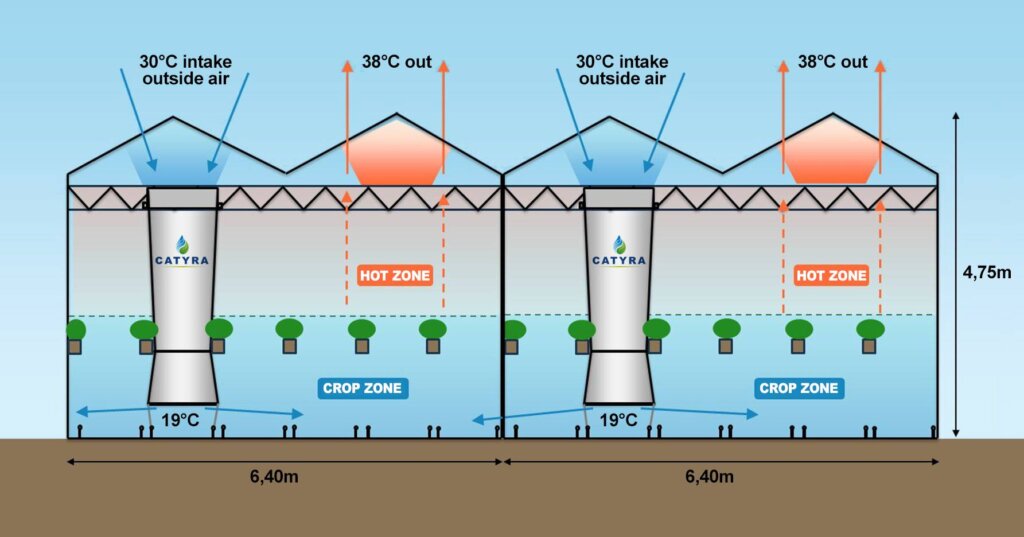
The right climate delivers immediate results — for the crop, the grower, and the environment.
The CATYRA Tower is designed to stabilise microclimates. This makes the technology applicable across multiple sectors where heat and drought stress play a role.
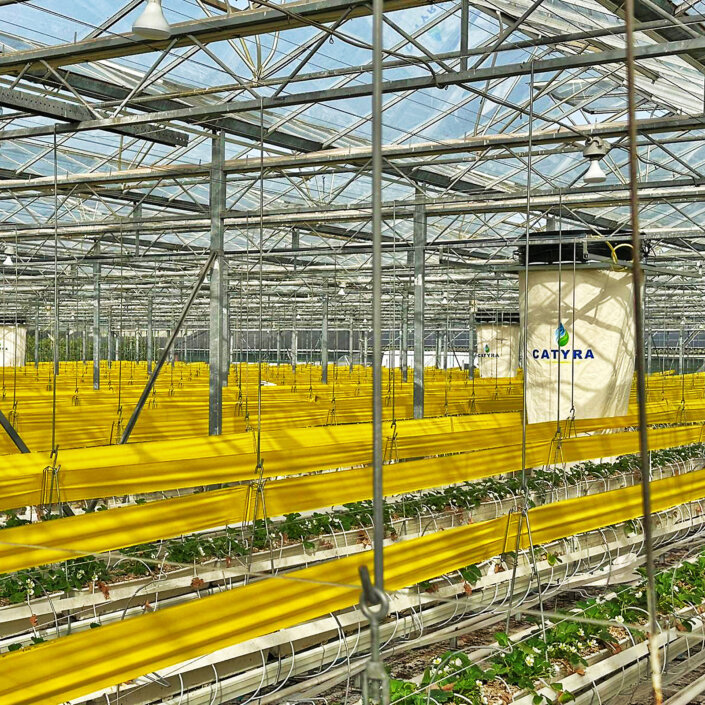
In greenhouses, the climate can quickly become unbalanced on warm, sunny days — also low-profile greenhouses. When the vapour pressure deficit rises too high, stomata close and growth temporarily stops. The CATYRA Tower can optimize the climate.
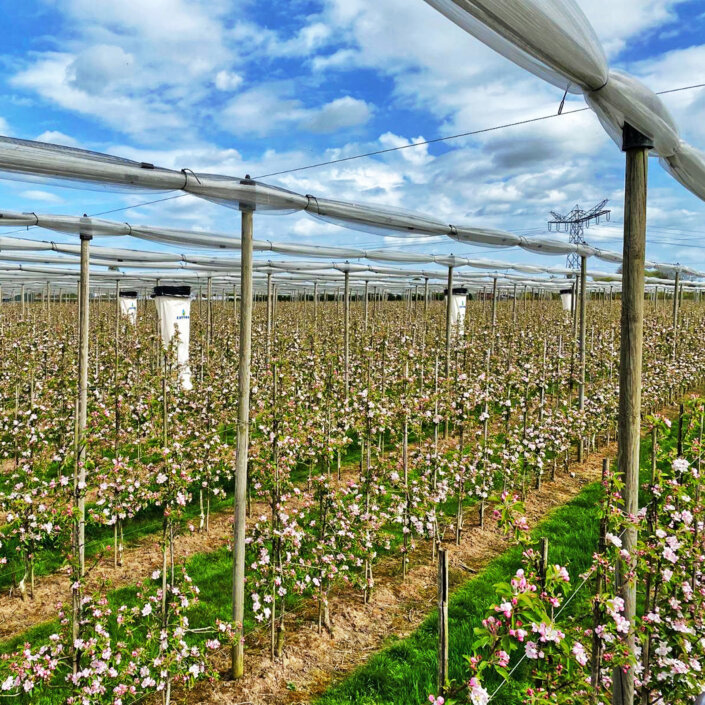
In orchards, hot and dry periods can lead to prolonged crop stress, resulting in smaller fruit, sunburn or reduced fruit set. The CATYRA Tower can optimize the vapour pressure deficit.
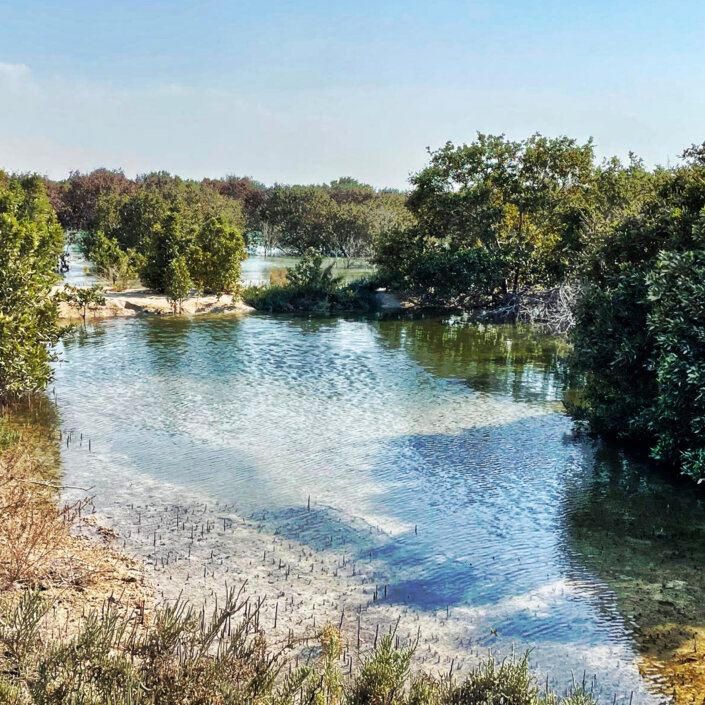
Optimizing microclimates can also contribute to ecosystem restoration and improved regenerative farming systems. CATYRA can thus support agricultural systems that combine productivity with ecological recovery.
New technology ultimately needs to prove itself in practice. That is why Catyra works with pilots and field projects to test the system’s performance in different conditions. By collaborating with growers and partners, real-world insights are fed directly back into further development.
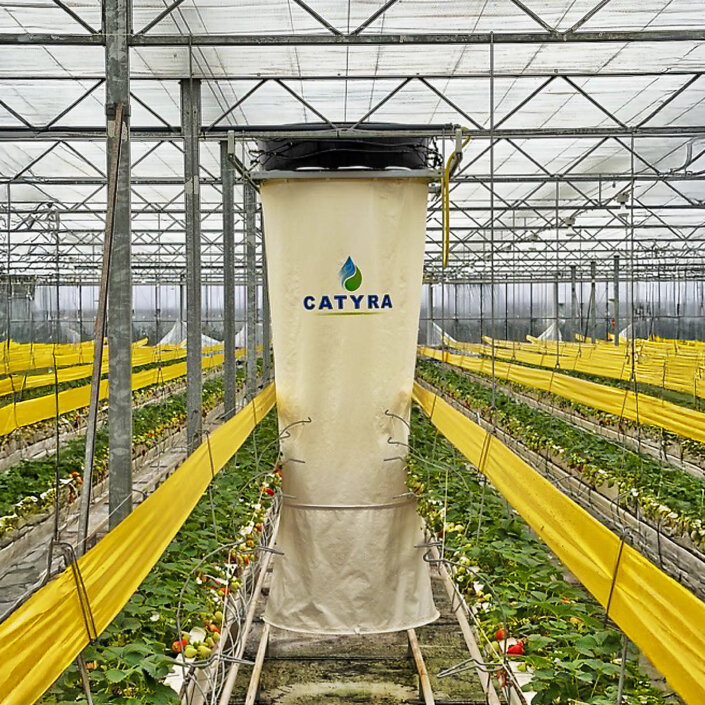
Since 1 March, a trial has been running at a strawberry grower in the south of the Netherlands, in a greenhouse. Catyra has installed Catyra Towers in a closed section, and early results are promising.
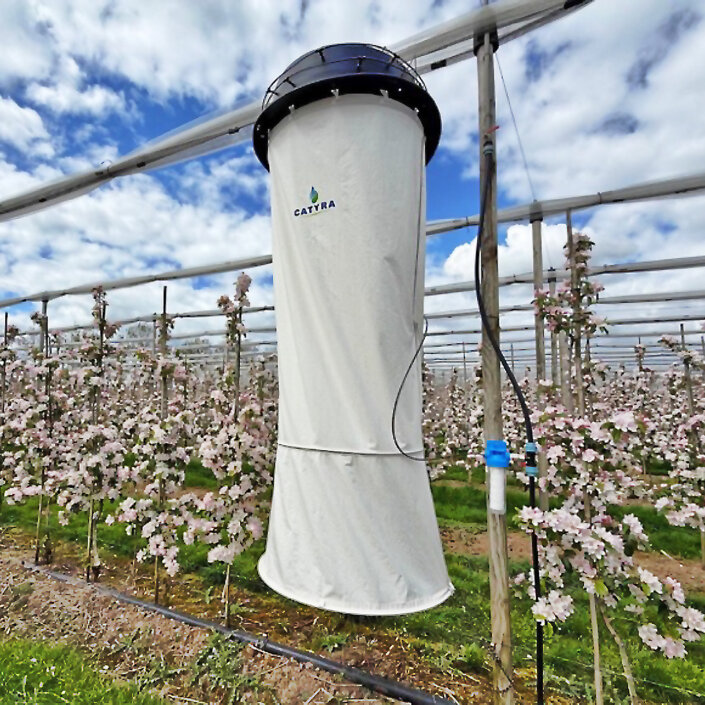
An apple grower in Puiflijk has agreed to participate in a trial in which the performance of the Catyra Towers is monitored. The Towers were installed in mid-April; we expect to achieve the most significant results during the hot summer months.
Would you like to stay informed about developments at Catyra? Sign up for our newsletter. We will keep you regularly updated on the progress we are making with the Catyra Towers.

Lorem ipsum dolor sit amet, consectetur adipiscing elit, sed do eiusmod tempor incididunt ut labore et dolore magna aliqua. Ut enim ad minim veniam, quis nostrud exercitation ullamco laboris nisi ut aliquip ex ea commodo consequat.

Lorem ipsum dolor sit amet, consectetur adipiscing elit, sed do eiusmod tempor incididunt ut labore et dolore magna aliqua. Ut enim ad minim veniam, quis nostrud exercitation ullamco laboris nisi ut aliquip ex ea commodo consequat.